Skynet Starter Kit: From Embodied AI Jailbreak to Remote Takeover of Humanoid Robots
Unitree is among the highest-volume makers of commercial robots, and their newest humanoid platforms ship with multiple control stacks and on-device AI agents. If the widespread, intrusive presence of these robots in our lives is inevitable, should we take the initiative to ensure they are completely under our control? What paths might attackers use to compromise these robots, and to what extent could they threaten the physical world?
In this talk, we first map the complete attack surface of Unitree humanoids, covering hardware interfaces, near-field radios and Internet-accessible channels. We demonstrate how a local attacker can hijack a robot by exploiting vulnerabilities in short-range radio communications (Bluetooth, LoRa) and local Wi-Fi. We also present a fun exploit of the embodied AI in the humanoid: With a single spoken/text sentence, we jailbreak the on-device LLM Agent and pivot to root-priviledged remote code execution. Combined with a flaw in the cloud management service, this forms a full path to gain complete control over any Unitree robot connected to the Internet, obtaining root shell, camera livestreaming, and speaker control.
To achieve this, we combined hardware inspection, firmware extraction, software-defined radio tooling, and deobfuscation of customized, VM-based protected binaries. This reverse engineering breakthrough also allowed us to understand the overall control logic, patch decision points, and unlock advanced robotic movements that were deliberately disabled on consumer models like G1 AIR.
Takeaways. Modern humanoids are networked, AI-powered cyber-physical systems; weaknesses across radios, cloud services, and on-device agents could allow attackers to remotely hijack robot operations, extract sensitive data or camera livestreams, or even weaponize the physical capabilities. As robotics continue their transition from controlled environments to everyday applications, our work highlights the urgent need for security-by-design in this emerging technology landscape.
Speakers of this event
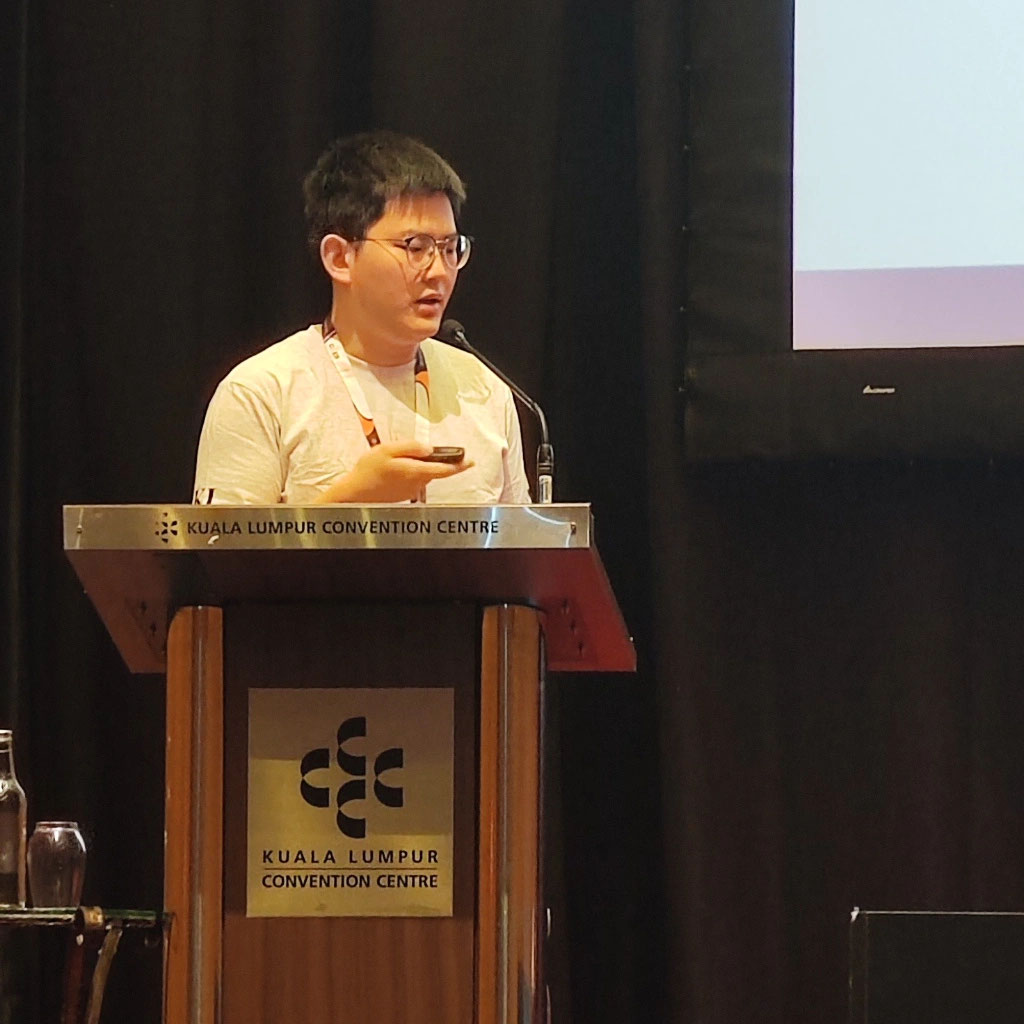
Shipei Qu
Shipei Qu (@itewqq) is a security researcher at DARKNAVY focusing on embedded systems, reverse engineering, side-channel attacks, and cryptography. He earned his Ph.D. from Shanghai Jiao Tong University in 2025 and was previously a member of the 0ops CTF team. His research has been featured at academic conferences including CHES and DAC, and he has identified zero-day vulnerabilities in targets spanning consumer IoT devices to the Linux kernel.

Zikai Xu
a postgraduate student in the Fluctlight Security Lab of Zhejiang University and a security researcher intern at DARKNAVY, focusing on mobile security and embedded system security. He is also a CTF Player in AAA and Katzebin.
Xuangan Xiao
Xuangan Xiao is a security researcher at DARKNAVY, with interests in mobile security and system security. Previously, he was a member of the CTF team 0ops and won DEFCON CTF in 2021 and 2022 with the united team A0E and Katzebin. He has discovered multiple vulnerabilities in mobile devices, IoT systems, and vehicles, and has published several papers at academic conferences such as IEEE S&P.