a media-almost-archaeology on data that is too dirty for "AI"
In 1980s, non-white women’s body size data was categorized as dirty data when establishing the first women's sizing system in US. Now in the age of GPT, what is considered as dirty data and how are they removed from massive training materials?
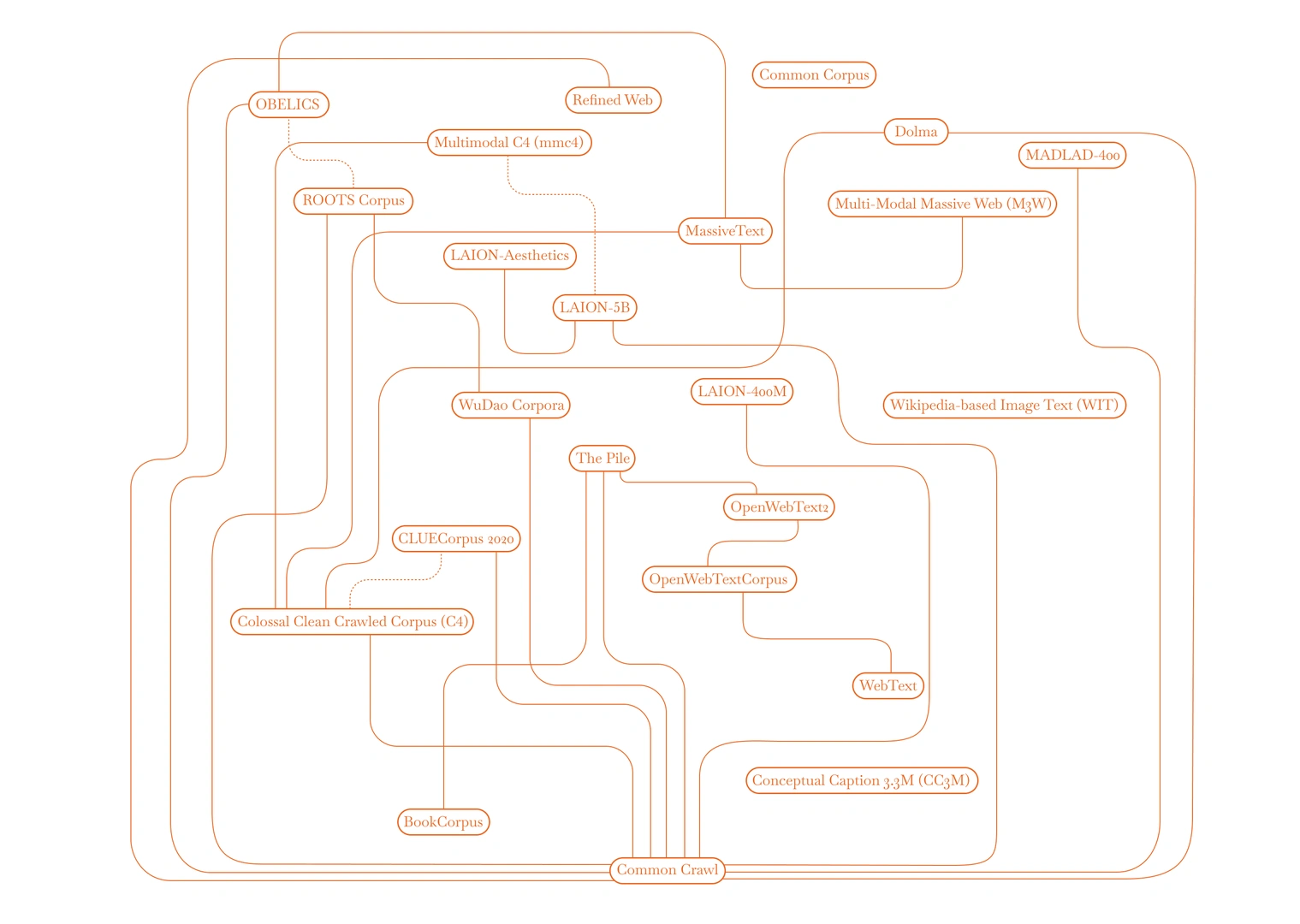
Datasets nowadays for training large models have been expanded to the volume of (partial) internet, with the idea of “scale averages out noise”, these datasets were scaled up by scrabbling whatever available data on the internet for free then “cleaned” with a human-not-in-the-loop, cheaper-than-cheap-labor method: heuristic filtering. Heuristics in this context are basically a set of rules came up by the engineers with their imagination and estimation that are “good enough” to remove “dirty data” of their perspective, not guaranteed to be optimal, perfect, or rational.
The talk will show some intriguing patterns of “dirty data” from 23 extraction-based datasets, like how NSFW gradually equals to NSFTM (not safe for training model), and reflect on these silent, anonymous yet upheld estimations and not-guaranteed rationalities in current sociotechnical artifacts, and ask for whom these estimations are good-enough, as it will soon be part our technological infrastructures.